Choosing nail drill bits: carbide, ceramic, diamond or steel
The bit decides how a drill feels in your hand far more than the drill does. Pick the material for the job, the grit for the stage, and keep the dust question separate from both.
Start with the shank: 3/32 inch
Before material or shape, check the part you never look at. The shank is the smooth shaft that goes into the drill's handpiece, and the standard size is 3/32 inch, which is 2.35 millimeters. Every CGBE bit set uses that size, so any of them fits most electric and cordless nail drills. If your handpiece is an older or unusual model, the manual will name the shank it takes. Read that line once and you never buy the wrong bit.
A bit that sits loose or off-center wobbles at speed, and you feel it as a buzz in your fingers long before you see it on the nail. Seat each bit all the way in and lock the handpiece before you touch a client's hand.
Four materials, four ways of working
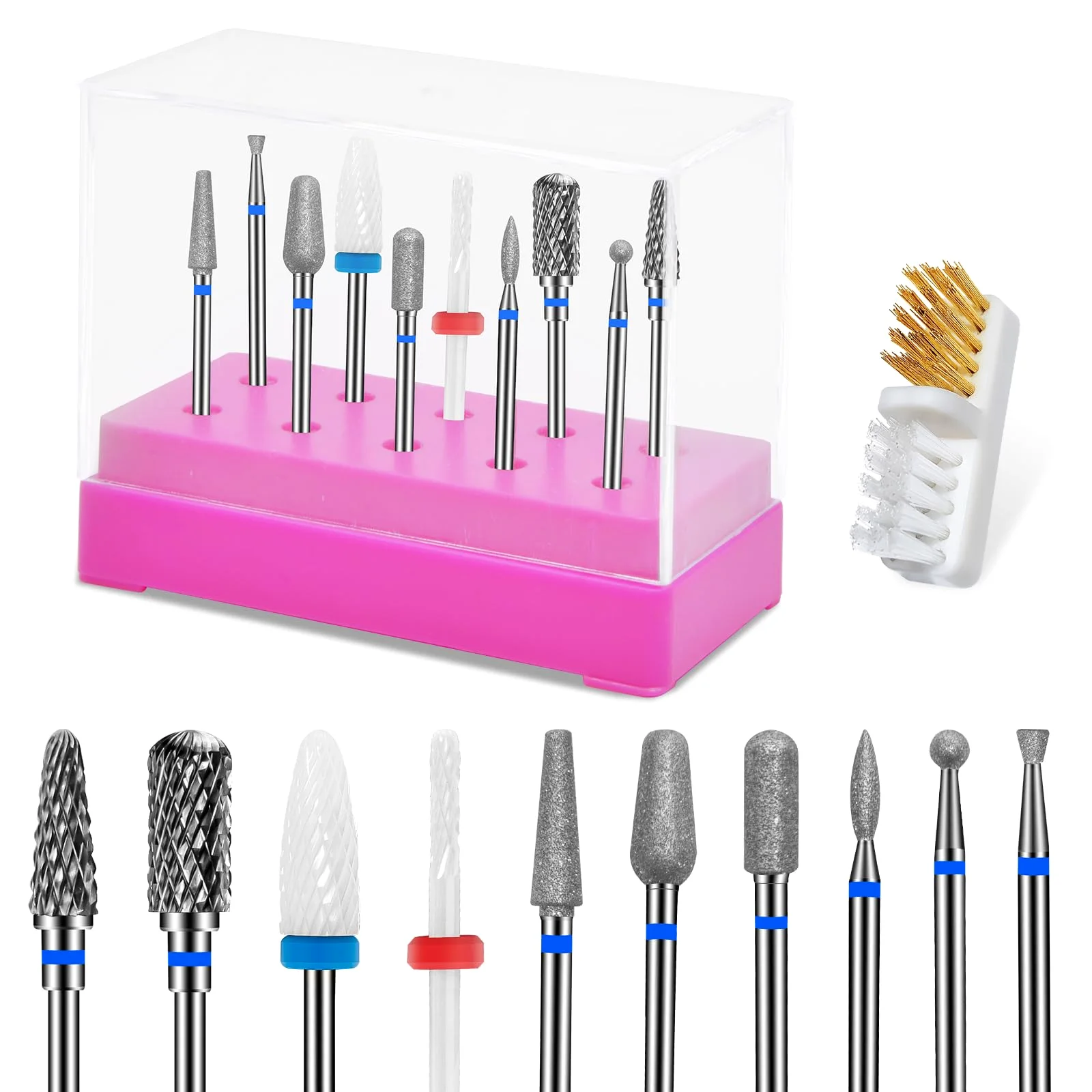
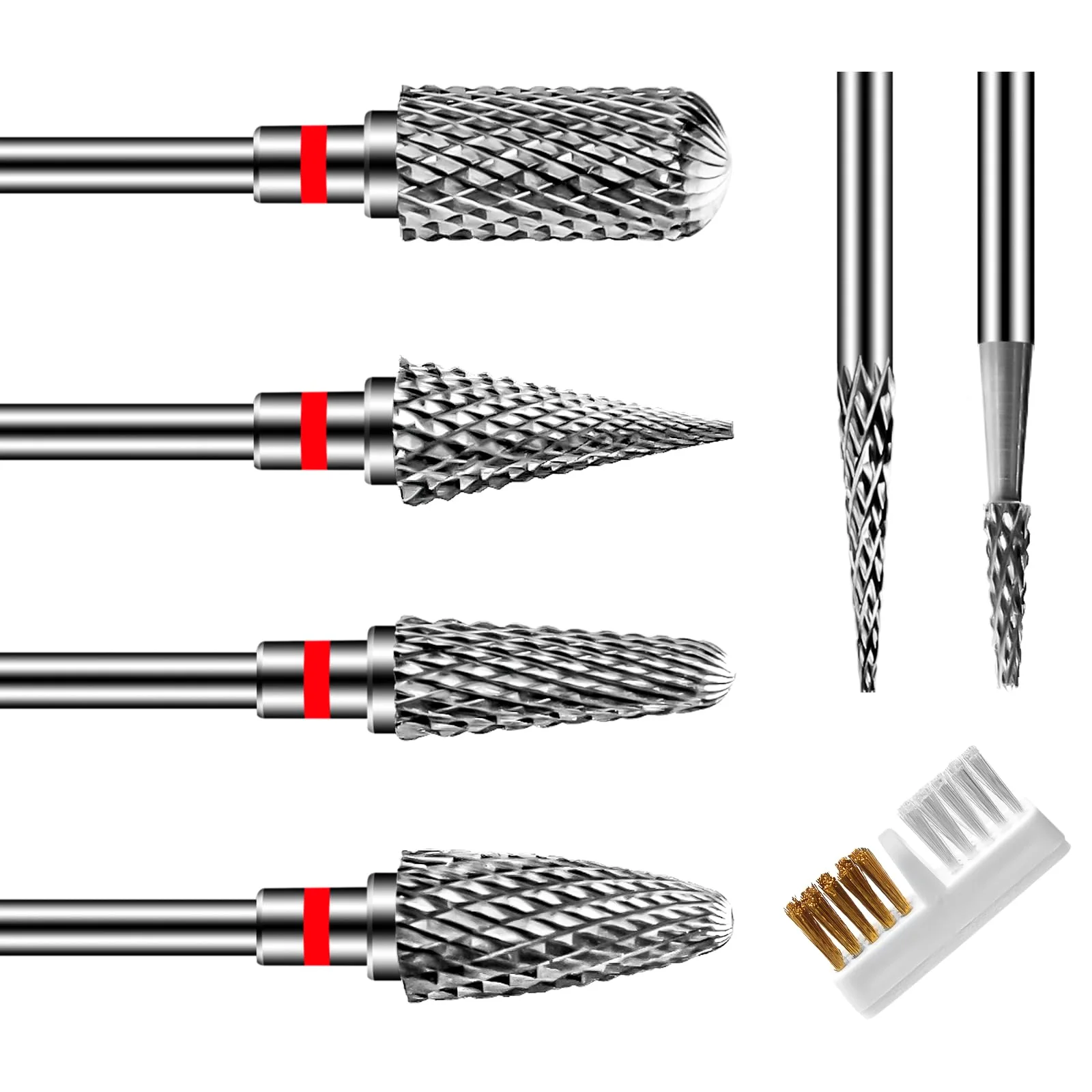
Tungsten carbide is the workhorse. It is very hard and wears slowly, and a carbide bit is cut with flutes, small blades along its body that shave product away rather than grind it. Our 10-piece tungsten carbide set has ten shapes in one box, as Set A in blue or Set B in red, with a cleaning brush. Carbide suits acrylic and hard gel, where you want to remove product steadily and with control.
Ceramic bits are made for heat. They shed it quickly, so the head cools fast even at high speed. That matters on long removals, when a metal bit can warm up against the nail. Diamond bits are coated with grit instead of cut with flutes. They are sharp and hard-wearing. Our 10-piece carbide, ceramic and diamond set packs two carbide, two ceramic and six diamond bits with one brush, a sensible start if you are still learning which material you like.
Stainless steel is the gentlest of the four. Our 10-piece stainless steel set is meant for filing natural nails and taking off thin acrylic, which makes it a fair choice for home manicures and for students learning control on the handpiece.
| Set | Bits | Material | Grit | Shank | In the box |
|---|---|---|---|---|---|
| 10-piece tungsten carbide | 10 | Tungsten carbide | Not listed | 3/32 in (2.35 mm) | 10 bits, cleaning brush. Set A blue or Set B red |
| 6-piece carbide | 6 | Tungsten carbide | Fine or medium | 3/32 in (2.35 mm) | 6 bits, each in a clear case, cleaning brush |
| 10-piece carbide, ceramic and diamond | 10 | 2 carbide, 2 ceramic, 6 diamond | Not listed | 3/32 in | 10 bits, cleaning brush |
| 10-piece stainless steel | 10 | Stainless steel | Not listed | 3/32 in | 10 bits, cleaning brush |
Fine or medium grit
Grit tells you how aggressive a bit is. Medium takes more product off with each pass, so it is the one for bulk work: thinning an acrylic set, taking down old gel, shaping a thick overlay. Fine takes off less and leaves a smoother surface, so it belongs to the last stage, close to the natural nail and anywhere you want to refine rather than remove.
Our 6-piece carbide set comes in either grit, with each of the six bits in its own clear case. Keeping one of each covers both stages of a set. A student still learning control may want fine first, since a slip with a fine bit takes off less.
Speed and pressure matter as much as grit. Let the bit do the cutting, keep it moving across the nail, and lift off the moment you feel heat. A medium bit pressed hard behaves like a coarse one, and a fine bit held in one spot still warms up the nail plate.
Cleaning the bits and storing them
Dust and gel pack into the flutes of a carbide bit and the grit of a diamond one, and a clogged bit cuts poorly and runs warm. Every set comes with a small brush for that. Brush each bit after use, working along the flutes, until the head looks clean. After that, a reusable bit is a reusable tool, and it goes through the same wash and soak as your nippers. The rules for that routine, state by state, are in our story on cleaning nail tools and the UV cabinet.
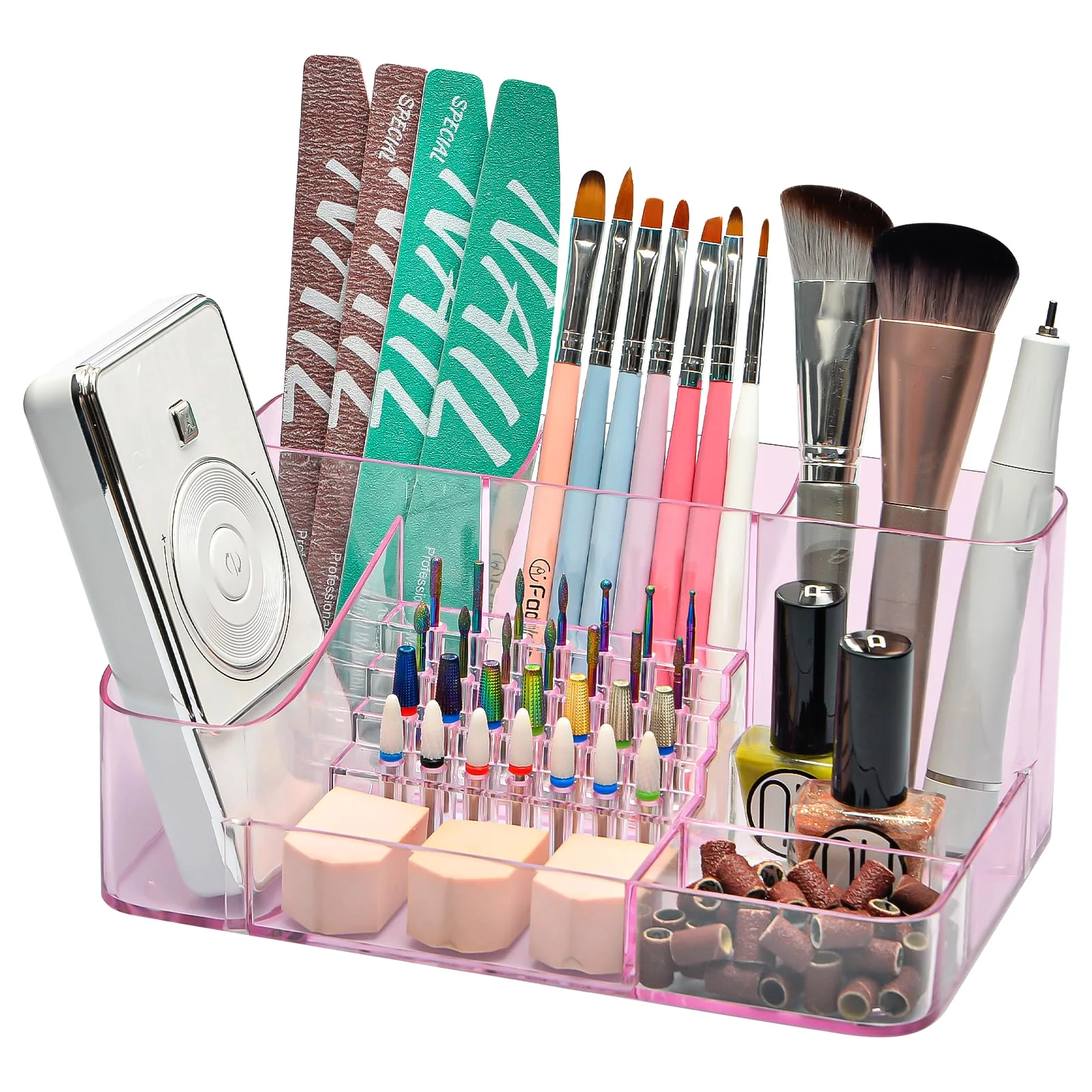
Storage is where most bit collections fall apart. The 28-hole acrylic bit holder holds 3/32-inch bits upright in four stepped rows, 28 holes in all, so every head is visible at a glance. Seven compartments take the rest of the drill kit: three small ones on the lowest layer for cotton pads, sanding bands and polish, a side slot for the drill handpiece, and three on the highest layer, at the back, for drill pens, files and clippers. The whole thing is 8.26 x 5.47 x 3.5 inches of thick acrylic. It comes as the holder only, with no tools inside.
Give each row a job. Put carbide in one, diamond in another, fine and medium apart, and you stop squinting at heads between clients. Keep bits that are waiting to be cleaned out of the holder entirely, in a separate covered dish, so the rows only ever hold clean ones.
Putting a kit together
For manicures at home, the stainless steel set covers natural nails and thin acrylic, and it asks the least of an unpracticed hand. A student in a nail course gets more from the mixed set, because two carbide, two ceramic and six diamond bits let you feel the difference between materials on practice tips before you commit to one.
On a working station, two layers make sense. The 10-piece carbide set gives the shapes for removal and shaping, and the 6-piece set in fine grit adds bits kept for finishing. Add the holder and the whole kit stands in one place on the desk, with the drill itself in the side slot and the brush in a back compartment where you can reach it between clients.
Filing dust is a ventilation job
No bit makes dust go away. Coarse or fine, carbide or ceramic, every bit that removes product turns it into dust, and some of that dust ends up in the air you breathe. OSHA says nail workers can breathe in vapors, dusts and mists from nail products, and that the exposure adds up with poor ventilation and long hours.
Its answer is ventilation, which OSHA calls the best way to lower the level of chemicals in a salon. The agency cites NIOSH lab tests in which exhaust systems cut workers' exposure by at least half, and suggests keeping heating and cooling fans running, using ventilated tables with fresh filters, and adding portable units that pull dust away at the workstation. NIOSH makes the same case for local exhaust at the station itself: portable units that filter the air or vent it outdoors, and downdraft tables, on top of general room ventilation.
Masks are the last layer, and the type matters. OSHA says surgical masks do not protect. A NIOSH-approved N95 respirator helps against dust when you file or buffer nails, but it does nothing against vapors, so it sits alongside ventilation rather than replacing it. NIOSH also lists closed containers and gloves among the basic controls.
- Set up local exhaust at the station before you plug in the drill.
- Keep the heating and cooling fans on, as OSHA suggests.
- Wear an N95 for filing and buffing, and treat it as dust protection only.
- Close product containers between uses.
With the air handled, the bit can do what it is good at. Browse the full drill bits shelf for every set and the holder in one place.
Every bit set and the holder come from the drill shelf of the people at CGBE.