Cleaning nail tools, and where a UV cabinet fits
Metal tools go through soap, water and a disinfectant soak before anything else touches them. A UV cabinet comes after all that, as a clean, covered place to dry and store them.
The order every rulebook agrees on
State boards word it differently, but the sequence for a reusable metal tool comes out the same in California, Texas, Florida and OSHA guidance. The California Board of Barbering and Cosmetology spells it out in five steps for every non-electrical tool that can be disinfected, and the other rules fall in line with it.
- Remove debris: dust, gel flakes and anything stuck in the jaw or along the blade.
- Wash the tool with soap or detergent and water.
- Dry it with a new paper towel, not the one from the last client.
- Fully immerse it in an EPA-registered disinfectant with bactericidal, fungicidal and virucidal activity, mixed and timed the way the label says.
- Take it out with gloves or tongs and put it away in a clean, covered place.
How long is the soak? California's fact sheet for consumers says the time is set by the disinfectant's maker, usually about 10 to 15 minutes. OSHA, writing for nail salon workers, gives a range of 10 to 30 minutes and adds a rinse and a dry before storage, with gloves on throughout. The number that counts is the one printed on your own bottle. Set a timer when the last tool goes in, because a tool lifted out early has been rinsed, not disinfected.
Fully immersed means the whole tool sits under the liquid, hinge and handles included. A nipper dipped jaw-first and left half in the air has only had its jaw treated.
What the rules say, side by side
Four rulebooks cover most of what a tech needs for this routine, and they agree more than they differ. Where they part ways is in the detail: Florida names metal instruments and a hospital-level disinfectant, Texas talks about a dry place apart from soiled tools, and California is the one that names the paper towel.
| Who | Cleaning and soak | Storage | UV units |
|---|---|---|---|
| California Board of Barbering and Cosmetology | Remove debris, wash, dry with a new paper towel, fully immerse in an EPA-registered disinfectant per the label (consumer sheet: usually about 10 to 15 minutes) | Clean, covered place labeled "Clean" or "Disinfected" | Not accepted as a way to disinfect soiled tools. The unit can be labeled as clean storage. |
| Texas, 16 TAC 83.102 | Clean and disinfect multi-use tools before each client | Clean, dry place, apart from soiled tools | Permitted as a dry storage container |
| Florida, Rule 61G5-20.002 | Clean with soap and water, then immerse metal instruments in a hospital-level or EPA-registered disinfectant per the label | Clean, closed cabinet or container | Only for storing articles after they are cleaned and disinfected |
| OSHA | Gloves, wash with soap and water, soak in an EPA-registered disinfectant for the labeled time (10 to 30 minutes), rinse, dry | Covered | For storing tools that are already clean and disinfected. The boxes do not disinfect. |
Files and buffers go once
Some tools cannot be disinfected at all, and the rules treat them as single-client items. California's Section 981(a) lists buffers, emery boards, pumice stones, toe separators, cotton pads and sponges, and requires that they be thrown away right after use on one client. The board's bulletin goes a step further: a tech may not save a buffer and use it again on the same client next time. Texas says the same of single-use and porous items, which are discarded after one client.
California's consumer sheet even asks clients not to request a used file or buffer back. So a buffer used on her nails goes in the trash at the end of her set, even if she asks to take it home.
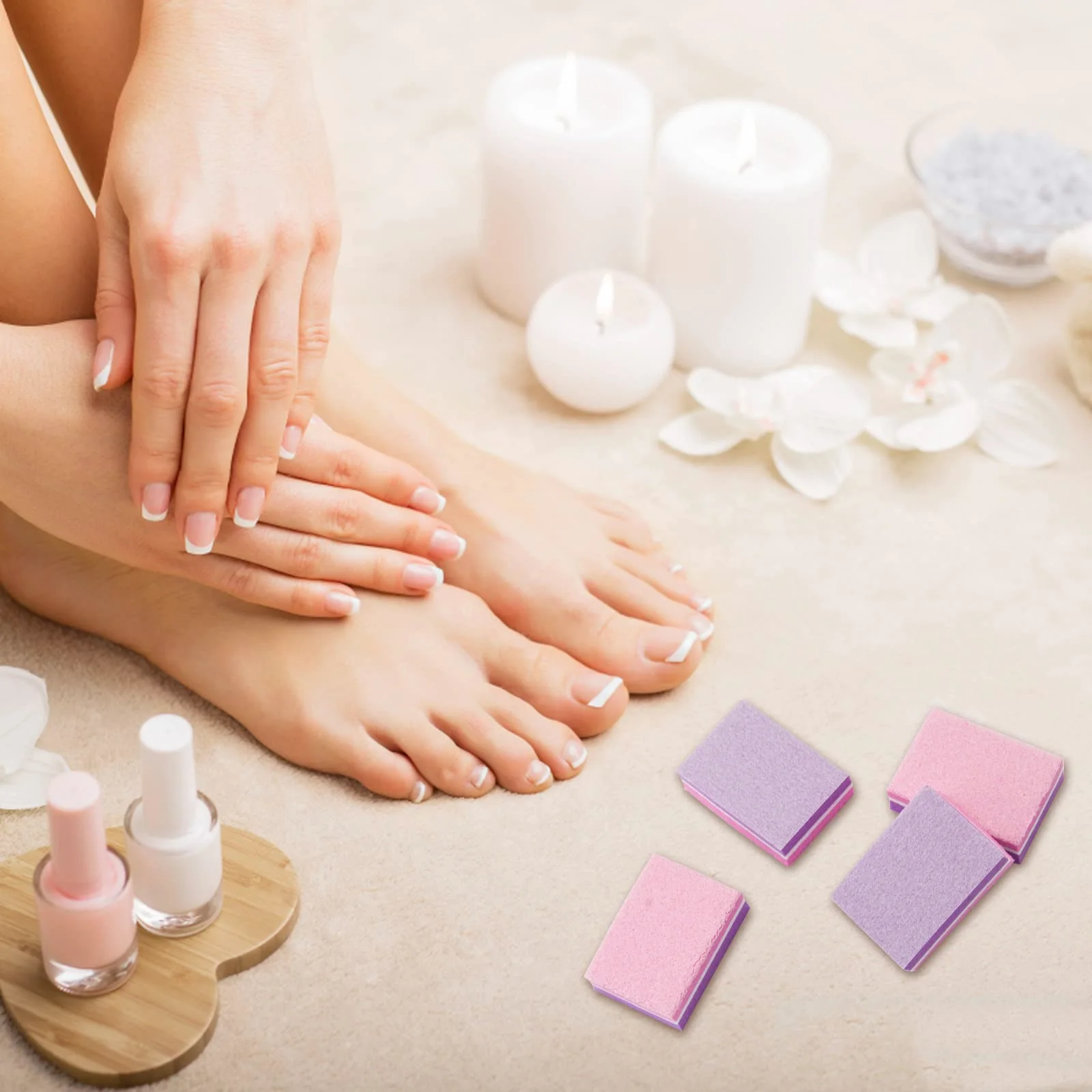
That rule is why our mini buffer blocks come 50 or 100 to a pack. At 1.4 x 1.0 x 0.5 inches, each double-sided block (100 grit on one face, 180 on the other) is small enough to use up on one set and throw out without a second thought. Keep the unopened pack in a closed drawer, take one out per client, and the question of what to do with a used buffer never comes up.
What the UV cabinet is for
The California board puts it bluntly. It does not recognize UV units as an approved way to disinfect soiled tools, and a salon that owns one still runs the full wash and soak. OSHA says the boxes do not disinfect. Texas allows UV electrical sanitizers as a dry storage container, and Florida allows UV only for storing articles after they have been cleaned and disinfected. Read together, the rules give a UV cabinet one job: the last step, after the soak.
Our 10L UV tool cabinet is built for that last step. Inside are two removable racks and a stainless steel tray, with room for nippers, pushers and scissors in one 10-liter space. Warm air from a PTC heater reaches up to 167°F and dries the hinges and joints that a paper towel cannot reach. A 257.3 nm UV light runs on its own timer. Those figures describe the machine. They are not a germ-kill result, and they do not move the cabinet ahead of the disinfectant in the order of things.
| Mode | Times | What runs |
|---|---|---|
| Dry | 45, 60 or 90 min | Warm air, up to 167°F |
| UV | 10, 20 or 30 min | UV light, 257.3 nm |
| Auto | 60 + 15, 90 + 30 or 30 + 10 min | Drying, then UV, in one run |
Label the cabinet as clean storage, the way California's Section 979(d) asks for disinfected tools, and keep soiled tools somewhere else entirely. A covered bin marked "Used" on the other side of the station works. If a tool goes into the cabinet straight from a client's hand, the cabinet has become a dirty-tool box with a light in it.
Nippers, scissors and the hinge
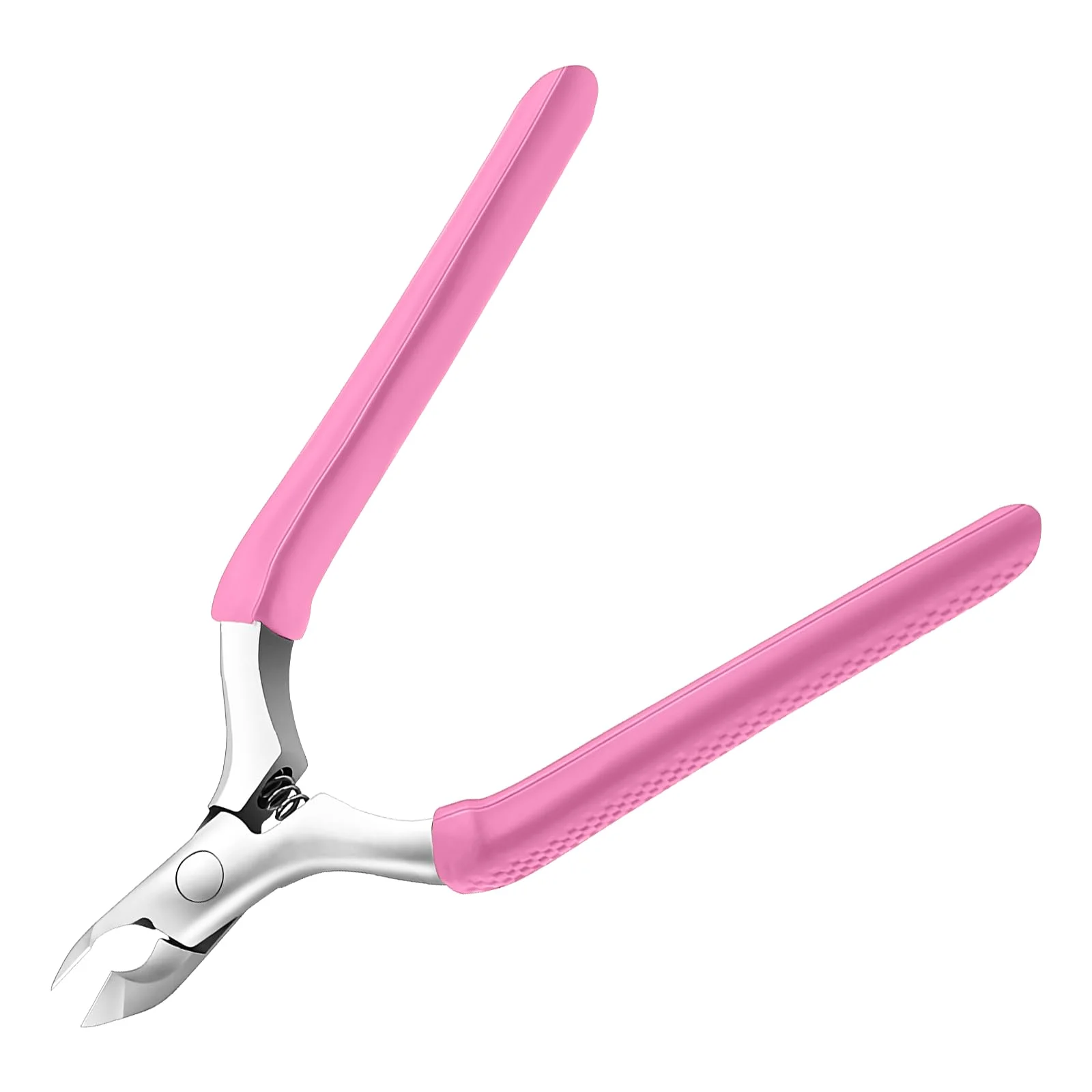
Hinged tools need a little more care at the sink. Our cuticle nipper has a 3/4 jaw of 4CR13 stainless steel, a spring action and a non-slip silicone handle. Open it wide while you wash, so soap reaches the joint and the spring, and open it again in the disinfectant so the liquid gets between the blades. Pull the protective sleeve off before the soak. It goes back over the jaw only once the tool is dry and disinfected.
Our curved cuticle scissors go through the same wash and soak with the blades open. Their extra-fine pointed tip is the part to protect afterward: lay the scissors flat on the stainless tray rather than dropping them point-first into a rack, and the tip stays as fine as it came.
Use the nipper for hangnails and loose, dead skin. The American Academy of Dermatology tells clients not to let anyone push or cut the cuticle itself, because that can lead to inflammation and infection, and the same page asks them to check that tools are cleaned and disinfected after every client. Both points are easy to meet with a clean nipper and a light touch.
OSHA's page on biological hazards explains why the routine matters to you as well as to the client. Nail workers can be exposed to bloodborne pathogens and to nail and foot fungus, from clients and from equipment that was not cleaned. Gloves for the wash and the soak protect your hands while you protect the next person in the chair.
A routine that fits between clients
None of this has to slow a busy day. Two sets of metal tools let one set soak while the other is in use, and the timer runs while the next client chooses a color. Buffers and files from the last set go straight into the trash. Metal tools go to the sink, then the soak, then a dry, then the cabinet. Gel and acrylic dust comes off drill bits with a brush first, a step our story on choosing nail drill bits walks through.
Everything on the station and lash care shelf is meant to sit at the end of that line, clean, covered and within reach.
The cabinet, the nipper and the buffer blocks all come from the station and cuticle shelves of everyone at CGBE.