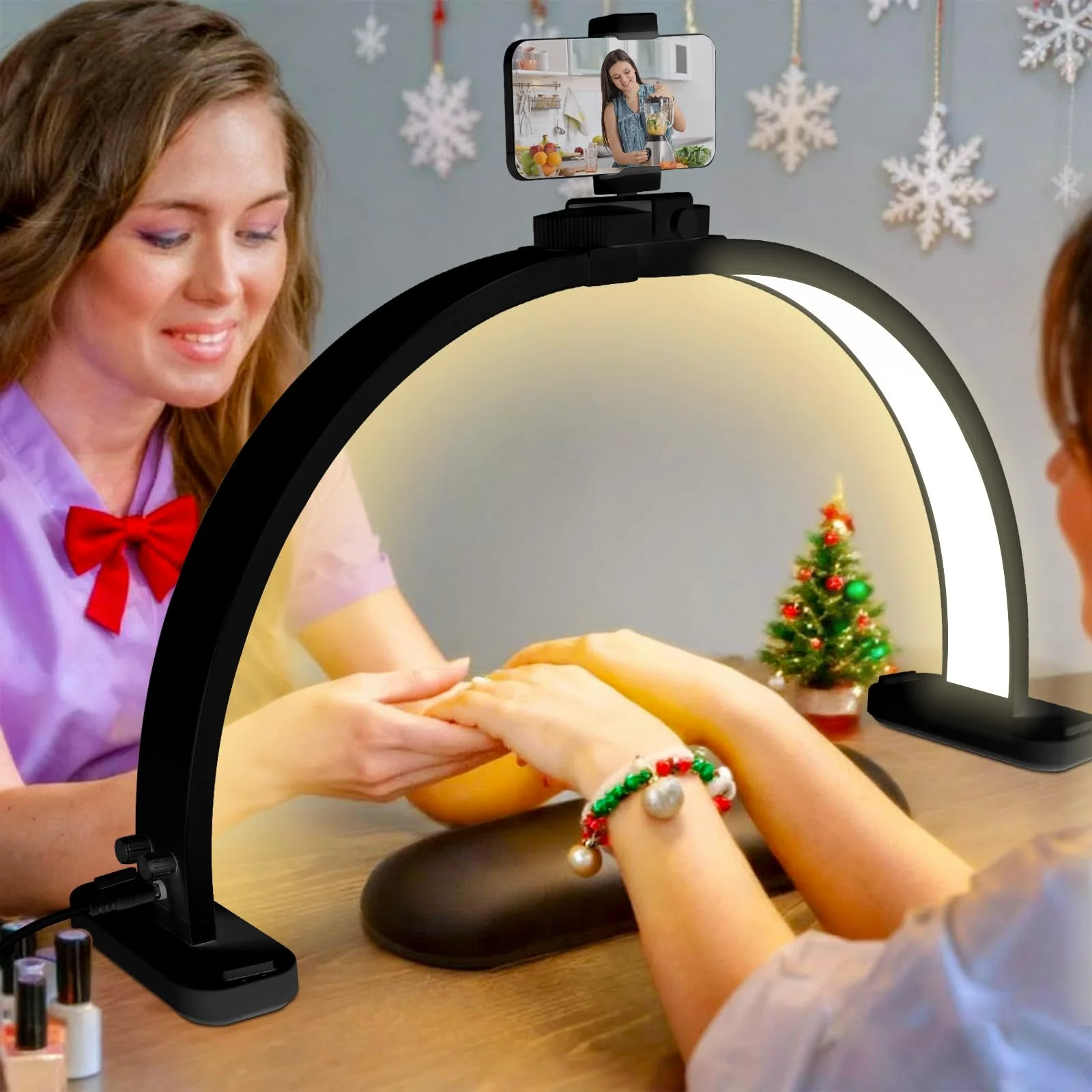
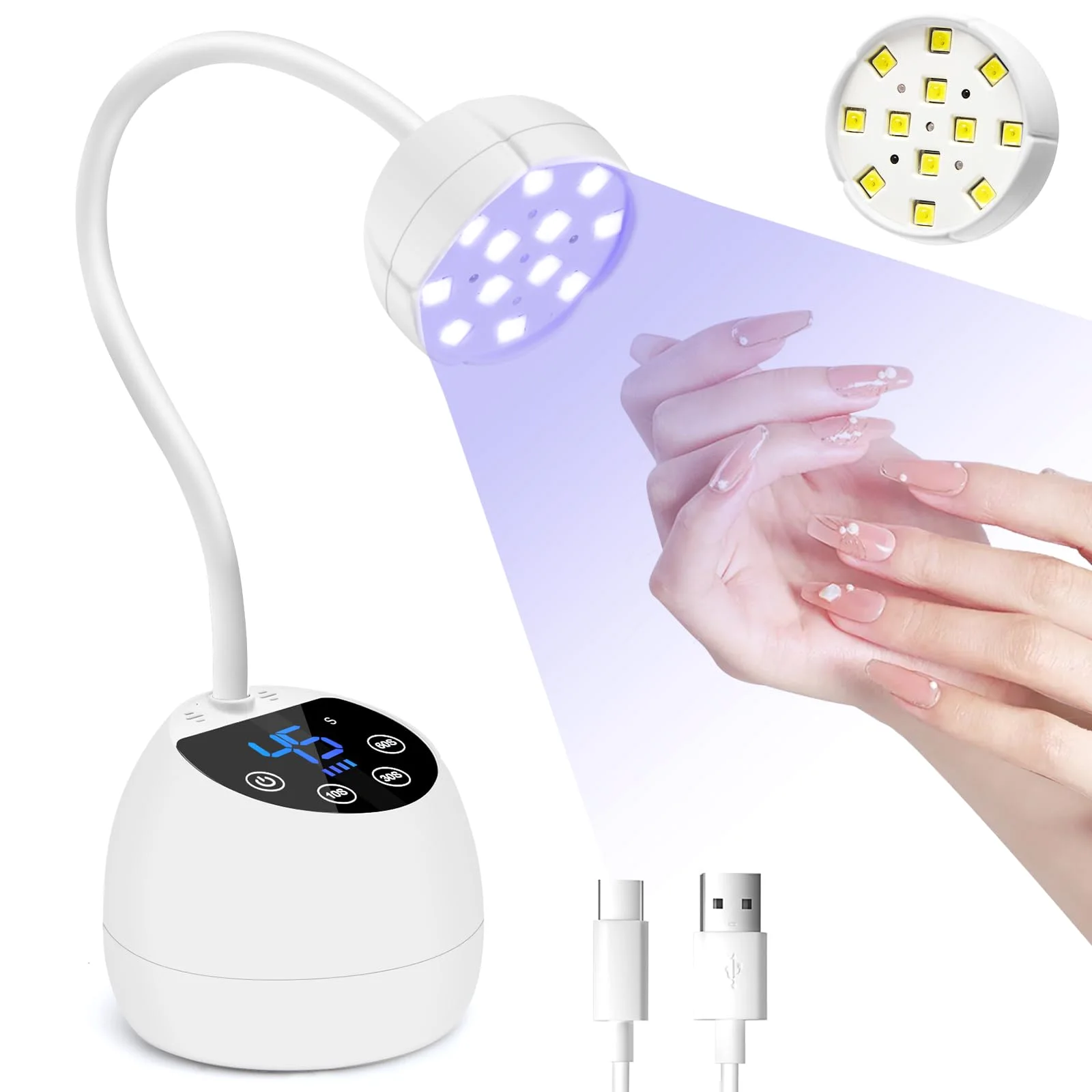
Setting up a lash station: light, pillow, trays and your own back
A lash set keeps you over one face for a long stretch, so the station has to work for both of you. Start with the light, then the client's neck, then the trays, then your own posture.
Light from above the bed
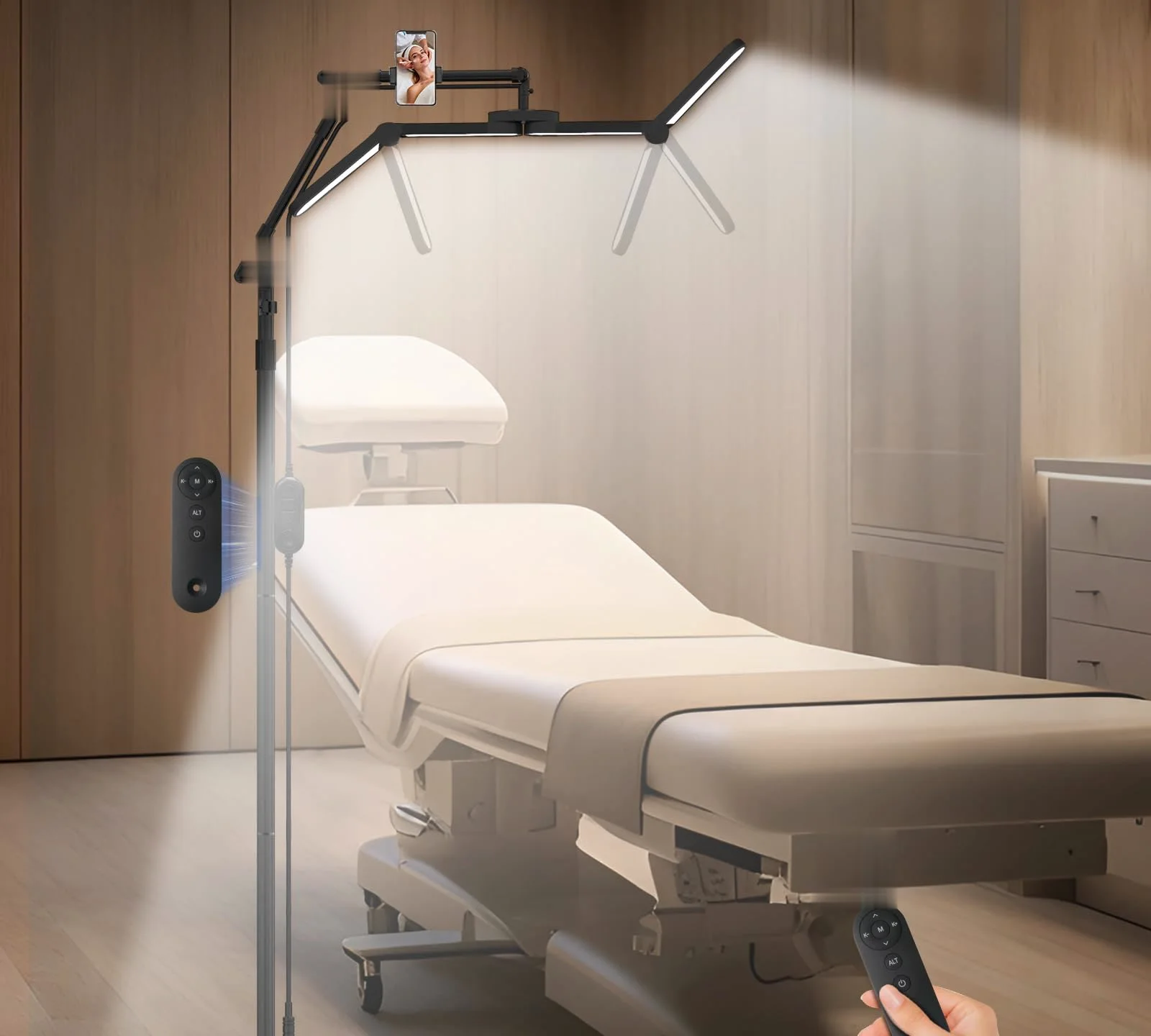
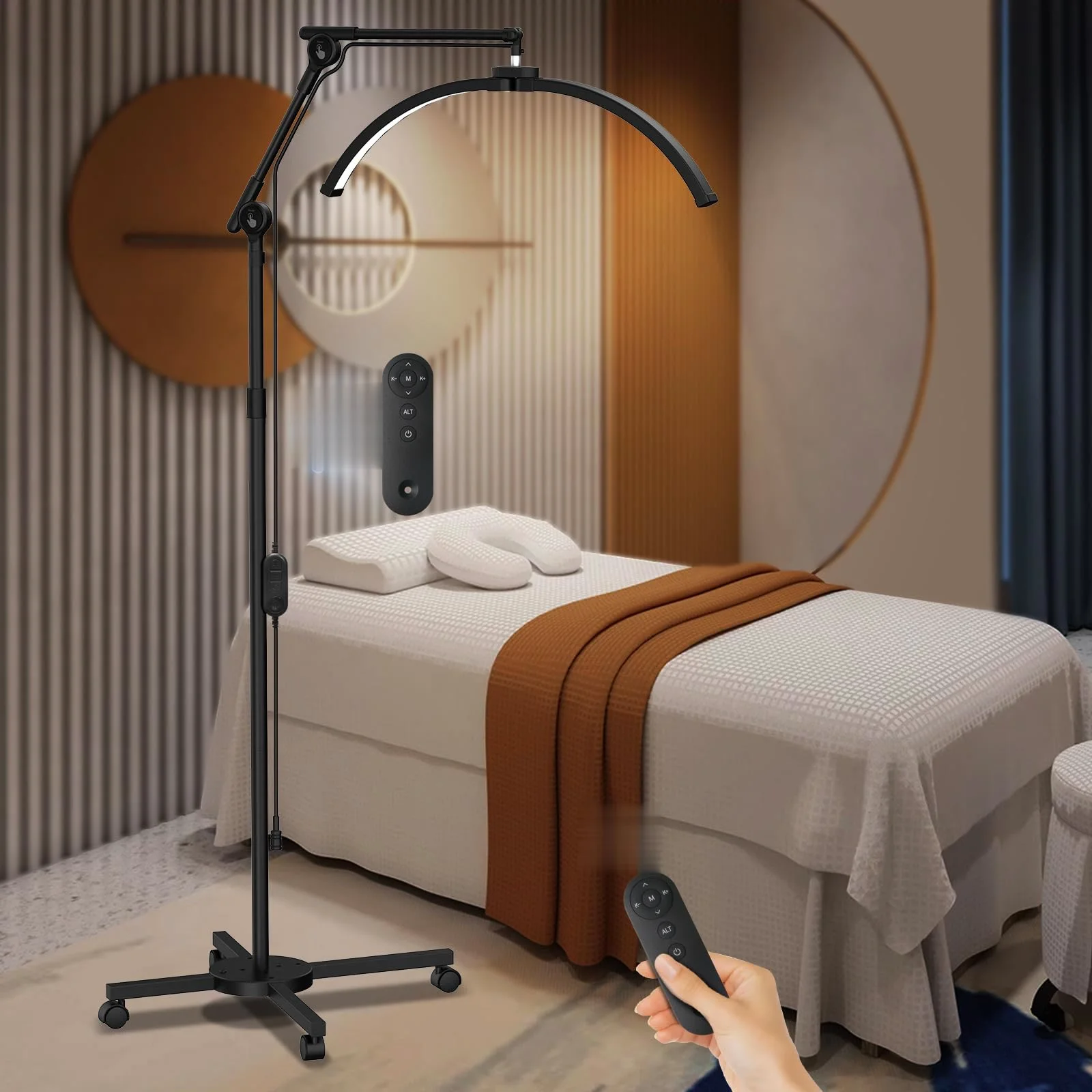
Lash work happens at the top of the bed, over a face that lies still for the whole appointment. The light has to come from above and slightly in front, across both eyes at once, without your head or hands getting between the lamp and the lash line. A desk lamp cannot do that from a side table. One on its own rolling stand can.
Our half moon lash light with rolling base stands from 57.1 to 80.7 inches tall, so the arch can sit high over a raised bed or come down low over a recliner. The head turns through 360 degrees and folds through 180, which lets you tip the curve until it faces down at the client's eyes. Its 308 LEDs carry a color rendering index of 90. Four casters with a one-press brake move it out of the way between clients and hold it still during a set.
The controls sit where your hands are. There is a button panel on the lamp and a magnetic remote you can stick to the stand or a metal tray, so changing brightness never means reaching up with glue on your tweezers. A phone clip comes in the box for recording a set. At 8.4 pounds it rolls easily across a studio floor.
The 3-segment foldable lash lamp takes a different approach. Its head is three panels, each adjusting on its own. Fold them inward and the light gathers onto a small area. Open them out and the head covers up to 34.25 inches, wide enough for a facial or a brow appointment as well as lashes. It stands from 49.6 to 59.8 inches, a lower range, so measure from the floor to the top of your bed and add the space you want above the face before you choose between the two.
Color temperature and brightness at the lash line
Both lamps run from warm 3000K to cool light, up to 6000K on the rolling lamp and 6500K on the three-panel one, with ten brightness steps each. Natural lashes are dark, fine and close together, and many artists isolate under the cooler settings, where each lash stands out clearly against the skin under it. The warm setting suits the minutes before and after the set, while you talk through the style and while you brush through the finished fan.
Turn brightness up for isolation and down for everything else. Ten steps let you set it once for the work and once for the conversation, and the remote means the change takes a second.
| Half moon lash light | 3-segment foldable lash lamp | |
|---|---|---|
| Height | 57.1 to 80.7 in | 49.6 to 59.8 in |
| Head | Arch with 308 LEDs, CRI 90, turns 360°, folds 180° | 3 panels, each adjusts on its own, covers up to 34.25 in |
| Color temperature | 3000K to 6000K, 3 modes | 3000K to 6500K |
| Brightness | 10 levels | 10 levels |
| Controls | Button panel and magnetic remote | Not listed |
| Base | 4 casters, one-press brake | Casters with brake |
| Weight | 8.4 lb | 11 lb |
The client's head and neck
A set can run long, and a client whose neck hangs in the air will shift, swallow and turn her head just as you place a lash. The U-shaped lash pillow is slow-rebound memory foam with a 22° contour that holds the head and neck together, so the neck is never left unsupported. It measures about 19.17 x 12.8 x 4.53 inches.
Two flannel covers close with a hidden zipper. Put a fresh one on for each client and wash the other, so the pillow is always ready and you are never working over yesterday's cover.
Trays, tools and the products near the eye
The same pillow carries a flat tool area on each side and two pockets underneath. That puts your lash tray, tweezers and glue stone right at the client's temple, where your hand already is, instead of on a cart you have to turn toward. Every turn away is a moment when the glue keeps setting without you.
Products on that tray deserve the most attention in the room. The U.S. Food and Drug Administration treats false eyelashes, lash extensions and their adhesives as cosmetics, which must meet cosmetic safety and labeling rules. FDA reminds users that the eyelids are delicate, so irritation or an allergic reaction there is a real problem, and it advises checking an adhesive's ingredients. It adds that eye products can become contaminated and cause infections. So hands get washed and products are not shared.
The American Academy of Ophthalmology, writing for clients, says lash extensions belong in the hands of an experienced aesthetician in a sanitary setting. Among the risks it names are infection or injury to the lid or the cornea, an allergy to the glue, and lash loss that can be temporary or permanent. Its advice to clients is simple to build into your booking routine.
- Keep the glue's ingredient list and expiry date where a client can see them, because the academy tells clients to ask for both.
- Suggest a spot test on the inside of the wrist before a first full set, as the academy does, and note the result on the client card.
- If a client reacts, the academy's advice is to see an ophthalmologist rather than remove the extensions at home. Say so in your aftercare card.
- Wash your hands before you open the tray, and keep one client's glue and lashes from the next client's station, in line with FDA's reminder not to share eye products.
Filming a set without a second pair of hands
Lash portfolios are built on before and after photos and short clips, and holding a phone over the bed is not an option with tweezers in both hands. The rolling lash light comes with a phone clip in the box, so the camera can sit with the lamp and look down along the same line as the light. On the three-panel lamp, a phone holder does the same job.
Film under the same color setting you worked in, so the lashes on screen look the way they did on the bed. Check the first second of footage for the edge of the arch, and move the phone until it is out of frame. A shot taken straight down, with the light falling evenly on both eyes, shows symmetry far better than one taken from the side.
Your own posture through a long set
Lash artists sit for a set the way nail techs sit for a manicure: leaning in, arms held up, hands doing small, repeated movements. OSHA's advice for nail salons carries over directly. Use an adjustable chair with back support, adjust the lighting so you can see without bending over, take breaks and stretch gently between clients. Its other suggestion, raising the client's hand or foot, translates to raising the bed so the face comes up to you.
Set the chair first, so your feet are flat and your forearms can rest. Then bring the bed up until the lash line sits where your eyes already are. Last of all, roll the lamp in and tip the arch over the face. Done in that order, the light follows your posture instead of forcing it.
If the station doubles as a nail desk on other days, our story on how to light a nail desk covers the desk lamps. Both lash lamps live on the lamps shelf, and the pillow sits with the rest of the station and lash care pieces.
The lamps and the pillow for a lash room are part of the Pro nail and lash line of the people at CGBE.